Monday, September 9, 2013

Saying good-bye to Jennifer


This week my family attended the memorial service for our cousin Jennifer. As my family gathered to say good-bye to our sweet cousin, who left us far to soon, I looked around the room at the my family and I realized that I have been part of this tradition for more than fifty years. We have come together to mourn the loss of grandparents, parents, brothers, sisters and children. After I got home, I started thinking about all these occasions and the lessons I have learned and theimpact they have had on me.

As a young child, I had a lot of experience with funerals. In January of 1956, my Mother's Grandmother died and two weeks later her Mother died. In March of the next year my paternal grandfather died and in December of that year his Mother died. Three months after my Great Grandmother died, my Uncle died. So, before I was ten, I was completely capable of planning a funeral. Of course, someone else would have had to pay for it. On every occasion, the routine was the same.

We would all be in and out of my Greatgrandparents house. One evening the family would meet at Rose Funeral Home to receive friends. The room was a large hall with different areas for people to sit. This would usually last for a couple of hours and sometimes the children would talk quietly in the hall just outside the hall. We knew not to wander around the mortuary and I cannot recall anyone ever being repremanded. We were part of a serious event for our family and we knew it.


Still, it was hard to be quiet for so long. We did not have phones or ipads to amuse us. I don't remember even having colrong books or other little toys that are so common in churches today. So I would always look for my Aunt Marcene or Aunt Aileen to head toward the restroom. We could leave with an adult and all the girls would follow them. Thank goodness it was a large room, more like a lounge than a bathroom. They would go there to smoke a cigarette and we would go with them, not just for the break from having to stand quietly while friends and neighbors came by to pay there respects, but to hear the stories from from our Aunts. They might be dicussing last minute arrangements such as who was bringing what to the family dinner or who might need to stop at the store on the way home. I can't remember what they talked about, but I still remember that I loved them even more for not shooing us away.


The next day we would meet at Rose for the funeral. Rose had a place for the family to meet and they would enter the chapel after everyone had arrived. The family sat in a smaller room on the side of the chapel separated by a screen. You could see into the main part of the chapel and I always though that it would be nice to sit there. After the service, the family would be escorted to the cars that were lined up for the processional to Lynnhurst Cemetery. Lynnhurst was lined with weeping willow trees and had a gated archway at the entrance.


After driving to the cemetery and making our way to the grave site, a few last words were said, our last good-byes as well.


Then the family would go back to my Great Grandparents house to eat. The family would crowd into the small house that always had room for one more. Food would be set out on the dining table and we would go around the table in cafeteria fashion choosing what we wanted to eat and letting the Mothers would weave in and out of the line over to fix plates for the smallest children. We did't have any special order, we never had a children's table, it was all of us together as one family.

At every death we repeated this same ritual. There is a sense of comfort in this and in being confident that the worst times will bring out the best in your family. As time has passed, our family has become much larger and since we live farther apart, we don't see each as often we once did. However, when we get together, it is still very much the same. I enjoy talking to my cousins and catching up on the latest news. Although it's been more than fifty years, I can see us sitting the hallway of my Great Grandparent's house just being together.
Throughout the long week as the family prepared for the memorial service, each of us offered the only solace available, being ther and the knowledge that we would continue to be there in coming weeks, months and even years ahead, It reminded me of what is important in our lives because we all face difficulties at one time or another. Faith, family, friends and the power of prayer can see us through. As always, I pray for you- for continued healing, for guidance and that you will always have what you need to see you through.


Sunday, September 1, 2013

Clinton School Integration and me

 
I grew up in a quiet neighborhood in the city with tree lined sidewalks. I knew all the neighbors and they knew me. We could walk just about anywhere I wanted to go. One of my uncles owned the drugstore, Mr. Proffitt owned the little neighborhood grocery store, Mrs. Hall had a perfect crabapple tree in her backyard. On hot summer nights we would play in the sprinklers while the grow-ups wold take turns churning ice cream. My great grandparents lived down the street and my family would get together at their house very often. The women would cook, the men would sit around and talk, but the cousins could play.

When I started school, it was the same school that my father and grandfather attended.  On my way to school each morning, I would walk down the street, past my great grandparents house, across the railroad tracks, past the church, past my uncle's drugstore on my way to school. I knew every person, every single step of the way and they knew me. Once I overheard two women sitting on their porch and one of them said, "There goes Buddy's little girl."

Sometimes, when we least expect, something happens that changes your world forever. For me, this was one of those days and I would never look at the world in the same way again.

One Sunday we were walking up the sidewalk to the church and a crowd of people was gathered in front of the door. When we got closer, I could see that someone had thrown red paint on the doors.


Lincoln Park UMC


Although I was still pretty young, this was very upsetting to me because I had never seen anything like this before. I could tell that all of the the adults were upset too. I asked my Mother about it and she told me that some people were upset with with our church and the things that we believed. It was not until many years later that I would understand what happened that day.


On December 5, 1950, a group of citizens filed a lawsuit which became known as McSwain et al. v. County Board of Education of Anderson County, Tennessee (104 F. Supp. 1861, 1952).


In his ruling announced on April 26, 1952, Federal District Judge Taylor denied the lawsuit and upheld the position of the county school board. "Judge Taylor decided Clinton African Americans had little to complain about and the problems and inconveniences of separate schools were “too small to be regarded as a denial of constitutional rights.” link


The legal setting changed, however, on May 17, 1954 when the U.S. Supreme Court ruled in Brown v. Board of Education that segregation was unequal and struck down the separate but equal foundation of Jim Crow segregation. Two-and-one-half weeks later, the U.S. Court of Appeals, Sixth Circuit, in a hearing where the Clinton black families were again represented by Looby, Williams, Cowan, and Marshall, reversed Taylor’s 1952 ruling and returned McSwain et al. v. County Board of Education of Anderson County to federal district court for a new decision “in accordance with the decision of the Supreme Court in Brown et al. v. Board of Education.”


As a result, Clinton High School was ordered to intergate. The Knoxville Ministerial Association (KMA), publicly supported the integration of Clinton High School. This organization of ministers in the local area, integrated themselves, was interested in equality. Ted Witt, our minister, fully supported the KMA on this issue.


I was right to be fearful. White people who supported integration were putting, themselves, their families and even their communities at risk. "Rev. Paul Turner, a white minister of First Baptist Church in Clinton, made his contribution when he escorted 10 of the 12 black students to school on December 4, 1956. When Turner returned from his walk, he was assaulted by a mob and badly beaten." reference


Years later, I had the honor of working with Alex Stuart, this is his story.

"On May 14, 1964, Mr. Stuart, then vice moderator of the local Union Presbytery, was attacked and injured during participation in a Presbytery matter. He, along with the Reverend Geddes Orman, the stated clerk of Union Presbytery and pastor of Norwood Presbyterian Church in Knoxville, and the minister of First Presbyterian Church at Knoxville College, were sent to Camden, Alabama, to check on some black churches in Alabama. Because the Knoxville College minister was black, he stayed with friends because he did not think the Camden hotel where his colleagues planned to stay would give him a room. After word got out that Mr. Stuart and the Reverend Orman had come to Camden with a black man, the two white ministers were attacked in their hotel room by a white man about 40 years old who mistakenly thought the men were civil rights workers. (This event occurred about a year after the Selma, Alabama, protest march during which a Unitarian minister was killed.) Mr. Stuart was severely beaten with the barrel of a shotgun; he suffered a broken right arm and multiple bruises on his left arm and leg and had to spend a week in Oak Ridge Hospital following his escape from Camden. His story made front-page news in the Knoxville News-Sentinel; the headline was "Pastor Tells of Alabama Beating." He was invited to tell his story at the June meeting of the General Assembly in Oklahoma City." reference


Jackie Lennon tells the story of her experience as a young black girl growing up in Knoxville, Tennessee in The Mee Street Chronicles.  It is a compelling, straight forward and honest look at her experience. 


 As an adult, I still remember how scary that Sunday morning was to me.  I am aware the my experience with fear was very limited compared to the brave black students that took those first steps to integrate public schools.


Statue of the Clinton 12, the first black students to enroll in Clinton High School


Thursday, August 29, 2013

Saying Good-bye to Old Friends Downtown


Pryor Brown Parking Garage 314 W. Church


Pryor Brown Garage photograph from 1929: Link
A demolition permit has sought for the Pryor Brown Garage: Newspaper article

Back View of 710 & 712 Walnut St showing St John's Cathedral Church on the left

710 & 712 Walnut Street, St John's Cathedral on the right

712 Walnut


St John Cathedral's application for a demolition permit for this buildings has been approved: Newspaper Article

East Tennessee Ferries


When early settlers first came to Tennessee, they were faced with many rivers to cross on their journey.  At first, they followed animal paths and Indian trails to find places that were the safest places to cross.  As the population increased, local settlers started ferries to help travelers to cross they river and to supplement their farm income.  Because rain could cause increased water flow making crossing the river more difficult and even dangerous,  passengers would have to wait until the flooding subsided to cross the river.  For this reason, ferries were also local social centers in rural areas.  Here was a chance to hear the news from a family passing through the area.

Early Statute 


 In 1804 County Courts were given authority to establish ferries and to set the toll rates. Ferries were free on election day.

Read more: here


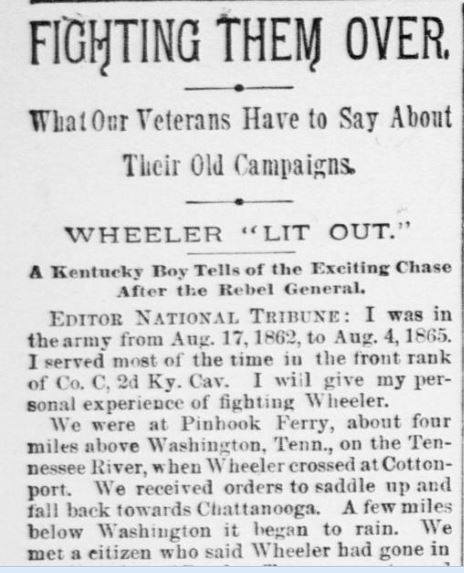
Because ferries were used to cross river, ferry points were key assets during the war.  An army was vulnerable during crossings because they were out in the open with little defense.

Article about Pinhook Ferry from The National Tribune. — 2 August 1894
Read the whole article: Here

As communities grew into towns and cities, citizens would build a bridge.  Sometimes the bridge was built by the local government and sometimes they were built by individuals.  The county bridges offered easy access across the river, but they were far from dependable routes for travelers.  As bridges were built, travelers were less and less dependent on ferries.  At one time, there were hundreds of ferries in East Tennessee, but now they are a memory. It's a memory that I don't think we should forget.


East Tennessee Ferry Locations

East Tennessee Ferry Map Link to large map.

Many thanks to all who have contributed to this map, especially my friends on the You know you're from Knoxville if: and the TNGenweb Project facebook groups.


Wednesday, August 21, 2013

Knox County Hospital Locations


Knoxville Hospitals
Fort Sanders 1901 Clinch Ave
Parkwest 9352 Park W Blvd
Tenova Regional Medical Center(St Mary's) 900 Oak Hill 
Tenova North Knoxville Medical Center 7565 Dannaher Drive
Tenova Turkey Creek Medical Center 10820 Parkside Drive
 UT Hospital 1924 Alcoa Highway

Knoxville Metropolitan Statistical Area:
Anderson, Blount, Knox, Loudon, and Union, Campbell, Grainger, Morgan, and Roane
(WBIR Mar 28, 2013) Link

St Mary's and Baptist Hospital Merged to for form Mercy.  I still think that is an odd name for a hospital.  Later Mercy was acquired by Tennova and Tennova started closing Baptist Hospital and limiting services at St Mary's.  Also during this time two smaller facilities were built one off Emory Rd and one in Turkey Creek.

Tennova acquired a piece of property on Middlebrook Pike and announced it's intention of building a new hospital on the site.  Article about the announced move and the uncertain future of St Mary's.  Link

Community Heath Systems planned buyout of HMA (parent company of Tennova)  Link

Recent article with photo of the new site plan: Link

Questions:

It is unclear what the plan is for the North Knox Medical Center.

How will closing St Mary's impact the availability of health care services (especially emergency services)?

What is the occupancy rate of current hospitals in the West Knox area?  Is another hospital needed?

Knox County Hospital Locations (map from Google maps)

Map Legend

1. Former Baptist Hospital

2. Former St Mary's Hospital, now Physicians Regional Medical Center

3. Tennova North Knoxville Medical Center

4. Fort Sanders Regional Hospital

5. University of Tennessee Medical Center

6. Approximate location of Tennova's proposed hospital

7. Part West Hospital

8. Tennova Turkey Creek Medical Center


Monday, August 19, 2013

James White Parkway Extension

Meade's Quarry


James White Parkway Extension

Newspaper  headlines on Sunday stating that TDOT's announcement to go forward with this extension is imminent without saying with route they will use, has a lot of people (including me) have expressed their concerns about the impact of the project. A number of of people support the no build option and at this point, so do I.  Link to Knoxville News Sentinel August 18th Article

Link to Victor Ashe's response: Link

Historical and Architectural Survey      Report:  TDOT's Report

TDOT's JWP Conceptual Stage Relocation Plan: Link

Response by Knoxville Mayor Madeline Rogero: Link 

Metropulse article: Link


Photos are from South Knoxville Parks.  The Urban Wilderness will provide trails to connect these and other wilderness areas South of the River.

Fort Dickerson

View from the South Knoxville Bluffs

Trail in South Knoxville

Ijams

South Knoxville Trail

Learn more about Knoxville's Urban Wilderness: Link

Friday, August 2, 2013

Neighborhood Stores


One of my fondest memories of the neighborhood where I lived as a child, and where my parents spent much of their childhood in the 1930's and 40s, is how many businesses there were in our little neighborhood. Back then, there were several grocery stores, a hardware store, a barber shop, a beauty shop, a drugstore, and a gas station. A walk home from school would pass a church or sometimes two.


My earliest memories of these stores is of the special occasions when my Great Uncle would hold my hand and we would walk to a little store at the end of the block. These little stores held such treasures, but we would always buy a pint of ice cream. Then we would walk back home, Uncle holding my hand and the brown paper bag in the other. He lived on a busy street and Uncle always instructed me to hold his hand tightly before crossing the street.


While we were out, Auntie would clear the table and wash the dishes. When we got back to their house, Uncle would give the bag to her and she would remove the paper box containing the ice cream and put the square block of ice cream on a plate and slice it into three pieces. Each of us would have a slice of ice cream on our plate and we would sit at the little kitchen table and quietly enjoy our treat. I had never seen anyone else slice ice cream to serve it, but somehow the little slices of ice cream on a little floral plate made it seem even more special.


 When I started school, I walked to school with my next door neighbor, Harris Irwin. Going to school was a pretty straight forward walk of about six blocks and Harris' job was to make sure that I crossed the streets and the railroad tracks safely. I enjoyed walking with Harris because even though he was in the third grade, he was always nice to me.

Walking home was completely different. All of the neighborhood stores were open and no one was there to be sure that I did not deviate from the prescribed route. I usually walked more or less straight home. I waited for the school crossing guard to tell us when we could cross the busy street in front of the school. As soon as we stepped from the street to the sidewalk, we were standing at the door to the drugstore and out of the watchful eye of the crossing guard. Since my Uncle Curly owned the drugstore, I was always welcome, although I think that everyone was welcome back then. The drugstore sold a little bit of everything and had a soda fountain on the back wall where you could purchase hamburgers or milkshakes and charge them to your parents. The best part was the candy located beside the cash register. You could run in, buy a piece of candy and be back out on the sidewalk in under a minute. Although, I usually settled for a piece of penny candy, you could buy a Hershey's bar for a nickel. The candy bars were huge back then! This is not my imagination, this is a fact.

I continued my walk home sometimes passing a grocery store or two and being content just to stop and look in the windows.
Chicamauga Market


For a long time this was Mr. and Mrs. Byerly's grocery store.  Mr. Byerly had a huge chopping block table, in the back and he was the butcher. When you told him what you needed, he would cut it to order and wrap it in white paper.


Eual Proffit's store was on the next block after you crossed the railroad tracks. It was a very nice and friendly store and he had twin daughters that were about my age. Then walking down to the next corner, I turned at the Baptist Church to walk the rest of the way home. You had to be very careful the next two blocks because there were no more sidewalks and no more stores.


At the end of the school year, my family moved and there were no more neighborhood stores until I moved to Fort Sanders when I was in college. Fort Sanders is a neighborhood near the University of Tennessee and I would say that people either loved it or hated it. I loved it. There were sidewalks and little stores, students, old people, poor people and there were still a lot of families too.


Little Grocery stores dotted the Ft Sanders neighborhood. I joined the other mothers pushing their babies in strollers to the store to buy groceries or stopping for ice cream on a walk.
Passing old people and students walking along the worn and cracked sidewalks of the busy tree lined streets made me feel quite a home in this bustling neighborhood. The stores had changed in the decade that had passed.  They were crowded with narrow aisles and shelves lined with a few basics and a lot snack foods and beer. The old single lights that had hung from the ceiling were replaced by harsh florescent bulbs. The Hershey's candy bars were smaller and cost more money, but nothing was nicer than walking along those streets on a warm autumn afternoon. The gold, red and yellow leaves provided shade on the still warm sunny days and the clear bright blue sky that we only see in the fall was so clear that you could see the mountains in the distance.


These businesses all disappeared in the following decades, as the University and the hospital expanded, tearing down block after block of family homes forcing the families out of the neighborhood and the remaining residents were forced to shop in suburban supermarkets, malls and big-box stores.


Today, there are no more grocery stores in the neighborhood, just a few empty buildings, but their memory remains.