Monday, September 7, 2015

Labor Day


The Haymarket affair (also known as the Haymarket massacre or Haymarket riot) was the aftermath of a bombing that took place at a labor demonstration on Tuesday May 4, 1886, at Haymarket Square[2] in Chicago. It began as a peaceful rally in support of workers striking for an eight-hour day and in reaction to the killing of several workers the previous day by the police. An unknown person threw a dynamite bomb at police as they acted to disperse the public meeting. The bomb blast and ensuing gunfire resulted in the deaths of seven police officers and at least four civilians; scores of others were wounded.
In the internationally publicized legal proceedings that followed, eight anarchists were convicted of conspiracy. The evidence was that one of the defendants may have built the bomb, but none of those on trial had thrown it.[3][4][5][6] Seven were sentenced to death and one to a term of 15 years in prison. The death sentences of two of the defendants were commuted by Illinois governor Richard J. Oglesby to terms of life in prison, and another committed suicide in jail rather than face the gallows. The other four were hanged on November 11, 1887. In 1893, Illinois' new governor John Peter Altgeld pardoned the remaining defendants and criticized the trial. From Wikipedia, read More: Link


Pullman Strike, in the Spring and Summer of 1894, was a widespread railroad strike and boycott that severely disrupted rail traffic in the Midwest of the United States in June–July 1894. The workers were angry about a pay cut, low wages, poor living conditions in the company furnished housing, and 16-hour workdays that were ordered by company’s president, George M. Pullman.


The federal government’s response to the unrest marked the first time that an injunction was used to break a strike. Amid the crisis, on June 28, President Grover Cleveland and Congress created a national holiday, Labor Day, as a conciliatory gesture toward the American labour . Read more here: Link

Saturday, September 5, 2015

Samuel Frazier House


 I recently found these pictures from several years ago when I had looked at this house. I didn't buy it because I was concerned about the water standing in the basement and the fact that the property behind it had a right of way between the house and the barn.

The first thing I noticed about this house is how much it looks like Ramsey House in Knox County.  Ramsey House was built built in 1797 by the architect Thomas Hope for Colonel Francis Alexander Ramsey.  Link to Ramsey House


Fortunately, someone bought this house and it has been beautifully restored and it has now been placed on the National Register.  Link to application:    

See the restored Samuel Frazier House here Link

Sunday, August 30, 2015

The Truth about Child Labor???

"Little Lottie, a regular oyster shucker in Alabama Canning Co. She speaks no English. Note the condition of her shoes... - NARA - 523398" by Lewis Hine - U.S. National Archives and Records Administration. Licensed under Public Domain via Commons -Link


The National Child Labor Committee, an organization dedicated to the abolition of all child labor, was formed in 1904. Photographer Lewis Hine produced much of his work for the organization. You can see his work here. The following is an article written to discredit allegations made by the National Child Labor Committee and the photographs of Lewis Hine.  Much of this work included efforts to keep children in school.

Child Labor Conditions Much Better Than Expected:


Conditions in these places are much better than I expected to find them and everywhere 1 have met the most cordial co-operation and anxiety to do the best that can be accomplished T found these mills in the South generally well lighted and ventilated heated in the winter and cooled in the summer. Generally the employers have been quick to utilize modern inventions such as exhaust systems for the removal of the lint, and cold water sprays, instead of the hot water sprays, in the summer to humidify the atmosphere for manufacturing purposes and the blower system for heating in the winter and cooling the air in the summer.

In spite of the sensational literature that is flooding the country at this time in one form or another much of it garbled a great deal of it written and foisted on the public for purposes of trade I have found the employer in nearly every case a most humane man.


Education Opportunities Afforded

Through the humane instincts of the mill owners, educational opportunities have been secured to the children. Kindergartens and schools are supported in whole or in part by all the operators. The public school system in the South is still in an imperfect condition and furthermore appropriations are insufficient to maintain the schools longer than four months in the year.

For the children who work in the mills there are night classes in arithmetic reading and writing. Frequently half of the children will go to school for a period and then alternate with the other half later on in working the mills. There are libraries supplied by the employers and churches toward the support of which they contribute entirely or in part.

New Laws (in Georgia)
Section 1: That from and after the approval of this Act no child under ten years of age shall be employed to labor in or about any factory or manufacturing establishment within this state under any circumstances.
Sec 2: That on and after January 1, 1907, no child under twelve years of age shall be so employed or allowed to labor, unless such child be an orphan and has no other means of support or unless a widowed mother.

However, many times these laws were ignored and, in most places, factory owners could not be prosecuted unless it could be proven that he knew the child was under age.

Sources: Fuel Magazine: The Coal Operators National Weekly, Volume 7 and other sources


Thursday, August 27, 2015

Hawkins County Marble

"US Capitol west side" by Martin Falbisoner - Own work. Licensed under CC BY-SA 3.0 via Commons -


The Hawkins County marble was the first quarried and it is said that it w brought to notice by the favorable expression with reference to it by Dr Troost, the first State geologist.
In 1838 the Rogersville Marble Company was formed for the purpose of sawing marble and establishing a marble factory in the vicinity of Rogersville. Orville Rice was elected president and SD Mitchell secretary. The company operated to a limited extent for several years, erected a mill and sold several thousand dollars worth of marble annually, which was mostly distributed in East Tennessee. In 1844 the company sold out to the president, Rice, who on a moderate scale carried on the business for many years. He sent a block of the “light mottled strawberry variety” to the Washington monument This was called the “Hawkins County Block” and bears the inscription “From Hawkins County, Tennessee. Another block of one of the best varieties was sent, by act of the Legislature, which was called the State Block. These blocks attracted the attention of the building committee of the National Capitol, who although they had numerous specimens from all parts of the Union before them, decided in favor of the East Tennessee marble. An agent was sent out by them to ascertain whether or not it could be obtained in quantity who upon examination found the supply apparently inexhaustible. As a result of these circumstances, an extensive quarry affording an excellent material, has been opened near Mooresburg, Hawkins, County, and is now known as the old Dougherty Quarry. From this was obtained marble for probably one half of the ornamental work in the Capitol at Washington. The balustrades and columns of the stairs leading up to the House and Senate galleries, the walls of the marble room, and other parts of the building are made from it. It has since been used in the United States Treasury building, the State house at Columbia, SC, and many of the finest buildings in New York, Philadelphia, Chicago, and Cincinnati. The stone from this quarry has not been used for general construction on account of the high price which it commands for ornamental work. 

Saturday, August 22, 2015

TAXES PAID IN CROWS


The people of the frontier counties were complaining of the constant depredations of the crows, squirrels, and wolves, as well as the ravages of the Indians, so the second General Assembly passed the following law in 1797:
Each county in this State (Tennessee) is authorized to lay a tax to be paid in squirrels or crows scalps on every person subject to a poll tax in their respective counties, not exceeding twenty five squirrels to each poll. One crow's scalp was to count for two squirrels scalps, and every person who failed to deliver his number of scalps was to pay one cent for each undelivered scalp. The scalps were to be delivered to the respective justices appointed to take the lists of taxable property and were by them to be burned after making proper entries on their books. (Image from The Graphics Fairy)


I don't even want to think about doing this!

Thursday, August 6, 2015

Juneteenth, the 8th of August and other dates that you may not know


The Emancipation Proclamation issued by Abraham Lincoln in 1862, which would go into effect on January 1, 1863. This only applied to states under Confederate control and did not include Tennessee.

Juneteenth or Freedom Day, is a holiday that commemorates the announcement of the abolition of slavery in Texas in June 1865, and more generally the emancipation of African-American slaves throughout the Confederate.

The Eighth of August is the day celebrated in East Tennessee and Kentucky and probably some other places as well. It was the only day blacks in Knoxville were allowed to visit Chilhowee Park.  Read a little about Andrew Johnson's slaves- Sam and Dolly were probably the best known.  Sam Johnson started a Freedman's school in Greeneville: Link

Finally, on October 24, 1864, Andrew Johnson freed all the slaves in the state of Tennessee.  Read more about Andrew Johnson's role here: Link

It is fitting the the celebration will held on Saturday August 8th at Chilhowee Park. You can read the details here. Link


The day will start with a service at Freedmen's Cemetery, adjacent to Knoxville College- a place where several of Andrew Johnson's former slaves are buried.

Wednesday, July 29, 2015

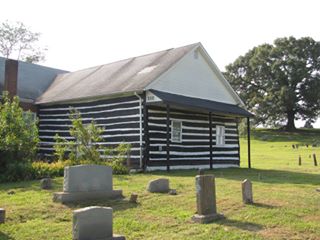
Old Union Meeting House Tragedy May of 1866

Union United Methodist Church  Photo credit Sharon Phillips McMurray


There are two accounts of a tragic event that occurred at the Union Meeting House in April of 1866.  The first account is from Mrs. Bean, wrote a letter to Richard Nye Price in 1910.  She was not a witness, but since she lived close to the church, she recalled what her neighbors told her.  The second article is from a newspaper article that was published soon after the event and later published in the Evening Telegraph (Philadelphia).


Old Letter from Mrs Bean to the Reverend Richard Nye Price dated 1910

Mrs Bean lived one mile away from the church and relates the following details:

Bn Hichey had an appointment to preach and it seemed like a very large crowd had formed

Theopholus "Theo "Schrivener and two of his sisters were among the congregation. Two boys named Ben and Clint Walters had been lured by a bad man named Frank Monday to prevent Mr Hichey from preaching. However, Mr Hichey had not arrived and the boys began to make trouble with Mr Shrivener.

The Walter's boys were armed and demanded that Me Schrivener come out.

At this point, Mr Eldridge Hord and William Shelton, both old men. took the ring leaders to the door and put them out roughly. He turned around and shot Mr Hord in the crowd.

Sam Smith, on the outside of the house, shot Mr Walters, then the other Walter brother shot Smith. Although hit, Smith fired and hit his assailant, severely, but not fatally.

The first boy lay in the yard dying and asking someone to pray for him. Ephriam Brown went out to pray for him.

The other wounded men recovered.

Not withstanding all ot his Ben Hichey came out at last and preached.

Mrs. B.L. Bean


The old log church and cemetery  
Photo credit: Sharon Phillips McMurray


Fatal Tragedy at a Funeral
The Bristol (Tenn.)

News reports the following particulars of a fatal tragedy which occurred last Sunday, at a church called Union, in the northeastern portion of Hawkins county, Tenn. The funeral of John Ellis, Jr., who had been a Confederate soldier, was to be preached by the Rev. R. M. Hickey, of the Holston Conference.

Two men by the name ot Walters, perhaps brothers, manifested a disposition to disturb the quiet of the
ssembly. Eldridge Hord, Esq., ot that community, remonstrated against their conduct, some angry words ensued, and Walters shot Hord, wounding him severely in the thigh.
Whereupon Samuel Smith, who bad been a Confederate soldier, fired twice upon Walters, killing:
him on tbe spot. The other Walters then shot Smith, wounding him slightly. Smith returned
the fire, wounding the second Walters mortally, and then made his escape.

(Source: Emory & Henry College Archives: Link


(Source: The evening telegraph. (Philadelphia [Pa.]), 25 April 1866. Chronicling America: Historic American Newspapers. Lib. of Congress. <http://chroniclingamerica.loc.gov/lccn/sn83025925/1866-04-25/ed-1/seq-1/>